Renter-Friendly Organization
15 Renter-Friendly Storage Ideas to Plan for Under $30
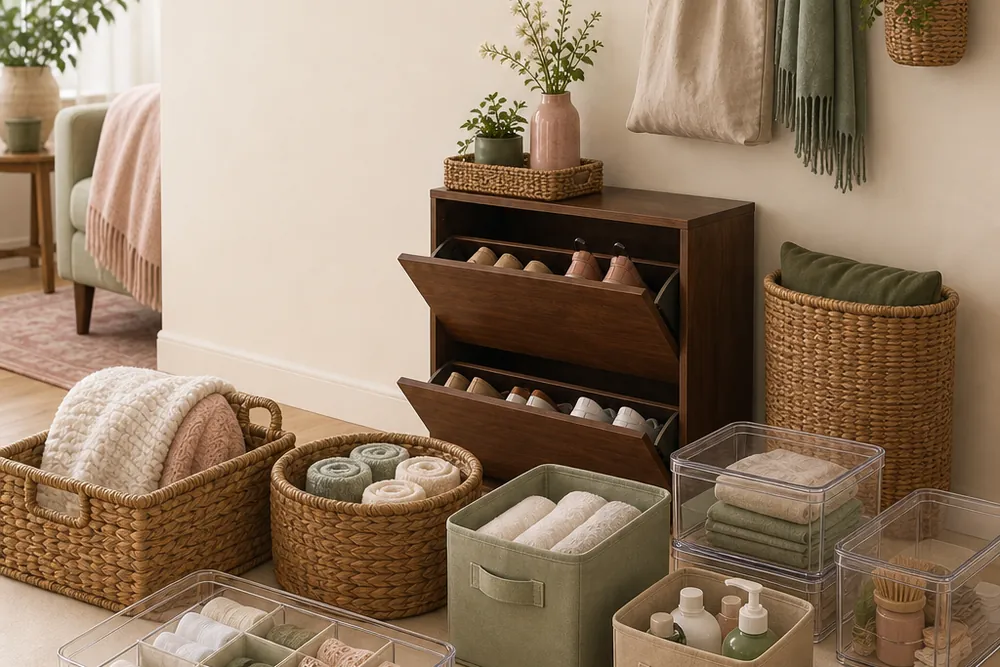
A useful storage upgrade does not need to be a complete closet system. In a rental, the best first move is usually a small, reversible tool that solves one repeated problem and can move to the next home. The ideas below are categories to compare, not live product recommendations. The under-$30 threshold is a budget-planning target; price, tax, delivery, size and material can move any option above it.
Before shopping, photograph the problem area, measure its width, depth and height, and count what must fit there. Check the lease before attaching anything to a wall, door or cabinet. A low purchase price is not a saving when the organizer blocks a door, lifts paint or is too shallow for the objects it was meant to hold.
Start at the entryway
-
A washable boot tray gives wet shoes a defined landing place. Measure the clear floor beside the door and keep the door swing and walkway open. A tray is easy to clean, but it only contains shoes; it does not hide visual clutter.
-
One open shoe rack uses vertical space without trapping moisture around everyday pairs. Check the usable shelf height against boots and larger shoes. Open racks ventilate well, while a closed cabinet looks calmer but needs more depth and airflow.
-
A handled basket for daily accessories can hold scarves, umbrellas or dog supplies. Choose a basket that can be lifted with one hand and does not become a general dumping zone. A weekly edit matters more than a decorative label.
-
A removable key station can reduce lost-key clutter when the wall finish and lease permit adhesive strips. Patch-test the surface, follow the cure time and stay below the rated load. A small dish on a console is the lower-risk fallback.
For a complete depth and door-swing plan, use the small-apartment entryway shoe guide.
Recover closet capacity
-
Slim, consistent hangers reduce the width consumed by a mixed collection of bulky hangers. Count the garments first and replace only the section that is crowded. Very thin hangers can crease heavy knits, so folded storage may still be better for sweaters.
-
A hanging fabric shelf creates folded zones from an existing rod. Measure the rod-to-floor drop and the closet depth; a wide unit can crowd hanging clothes or scrape the door. Soft shelves suit light items better than dense stacks.
-
An over-the-rod second bar can use the empty space below shirts. It must hang from a sound existing rod, and long garments need their own full-height section. Do not transfer more weight to a rod than its installation can support.
-
Two labeled shelf bins contain light seasonal items on the upper shelf. Keep frequently used pieces within comfortable reach and avoid heavy overhead loads. The small rental closet guide maps the rod, shelf, floor and door as separate zones.
Make kitchens and bathrooms easier to scan
-
A shallow turntable can make bottles visible in a cabinet corner. Measure the full diameter plus finger clearance, and avoid using one where rotation could hit a pipe or hinge. Tall bottles may tip when the rim is too low.
-
A handled cleaning caddy keeps a small set of supplies portable. Store it away from food, follow every product label and place leak-prone bottles upright. A caddy improves access but should not encourage stockpiling chemicals.
-
A narrow shelf riser adds a second level for cups, bowls or pantry goods. Confirm the cabinet opening, not just the interior width, and leave ventilation openings unobstructed. A fixed riser is simpler than stacking unstable bins.
-
A washable bathroom tray groups daily toiletries and makes the counter easier to wipe. Pick a non-absorbent surface for a humid room and leave room around the sink. The small bathroom organization guide covers moisture, ventilation and no-floor-space options.
Use hidden and mobile zones
-
A lidded under-bed bag can hold clean, dry seasonal textiles. Measure from the floor to the lowest part of the frame and leave enough grip space to pull it out. Soft bags fit shallow gaps, while rigid bins protect better from crushing.
-
A compact rolling cart can serve a kitchen, bathroom or work corner. Map the complete route before buying: the cart needs to clear thresholds, handles and open doors. Wheels add access but can also drift on an uneven floor, so use the supplied locks when present.
-
Drawer dividers stop small items from spreading across a whole drawer. Measure the inside at its narrowest point and check that a spring-loaded divider will not bow a thin drawer wall. Small open boxes are a gentler alternative.
Build a realistic $30 plan
Choose one bottleneck and write down three numbers: available dimensions, item count, and maximum all-in cost. Compare options by fit, access, material and exit cost, not by the listing image. Exit cost means what happens when you move: can the piece fold, separate, or work in another room? A slightly simpler basket that fits three future uses may offer more value than a highly specific organizer.
Prices change, so use current retailer information only at decision time. Include delivery and any accessories needed for safe installation. Do not combine several cheap objects merely to reach a styled look; one correctly sized organizer is often more useful than a matching set that fills every surface.
Know the limitations
Freestanding does not automatically mean stable. Tall or narrow units can tip, and some manufacturers require anchoring; follow that requirement even when it means the item is unsuitable for the lease. Over-door organizers can interfere with seals, hinges and closing clearance. Adhesive systems depend on surface type, preparation, temperature and removal technique. Tension systems need sound parallel surfaces and still have load limits.
The renter-conscious choice is the one that fits both the room and the agreement, not simply the one marketed as removable. Start with the reversible floor, shelf and rod options, then consider surface-mounted storage only after checking the lease.
Continue the room-by-room setup
Use the storage-bin material and fit guide before buying containers, or follow the first-apartment organization checklist to sequence a whole move. You can also return to all eight guides and start with the room that causes the most daily friction.
Frequently asked questions
Can every idea here be found for less than $30?
Treat $30 as a planning ceiling, not a quoted price. Size, material, delivery and local availability change the total, so compare the current checkout cost before buying.
Are adhesive hooks safe for every rental wall?
No surface treatment is universal. Check the lease and manufacturer instructions, test one strip in a hidden area, respect the stated load limit and remove it using the specified method.
Which storage change should I make first?
Fix the repeated daily bottleneck first. That is often shoes at the door, an overfilled closet rod, an inaccessible under-sink cabinet or loose items on a kitchen counter.