Small Apartment Storage Ideas
Best Storage Bin Types for a Small Space: A Fit Guide
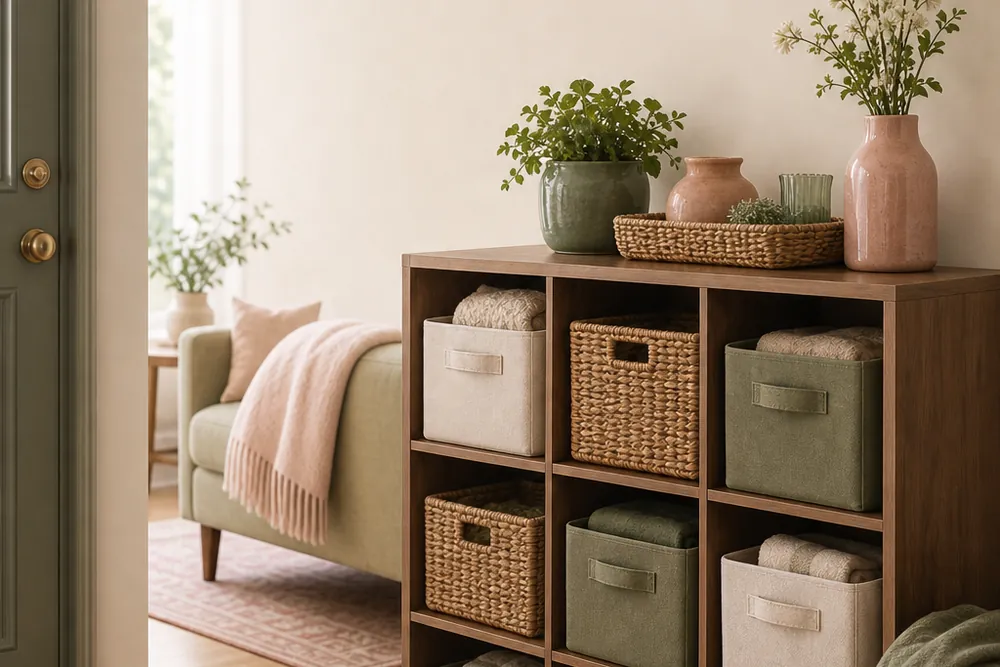
The best storage bin is not a universal shape or material. It is the container that fits a specific opening, protects a specific group of objects and can be reached without moving three other things first. In a compact home, a bin that wastes two inches on every side can consume an entire shelf. Start with geometry and access; choose color only after those two questions are settled.
This guide compares container types, not individual products. Exact dimensions, load ratings, food-contact suitability and care instructions vary by manufacturer, so verify those facts on the item you are considering.
Measure the usable opening, not the empty shelf
Record interior width, depth and height, then measure the narrowest point of the route into the space. Cabinet hinges, door frames, shelf lips and plumbing can make the opening smaller than the interior. For a pull-out bin, include the handle and the hand clearance above it. For a lidded bin, decide whether the lid can open in place or the whole container must come out.
Use a taped cardboard rectangle to test the footprint. Slide it through the opening and mimic the lifting angle with your hand. This simple model reveals whether a deep bin will hit the opposite wall or whether a top-shelf basket can be lowered safely.
Compare the five useful bin families
| Bin type | Strong use case | Main trade-off |
|---|---|---|
| Open handled plastic | Daily pantry, cleaning or bathroom groups | Fast access, but contents collect dust and stay visible |
| Clear lidded plastic | Seasonal goods and protected back-stock | Easy identification, but rigid sides waste irregular gaps |
| Opaque lidded box | Visual calm on open shelving | Labels must be maintained and lids slow frequent access |
| Woven basket | Light textiles and visible living areas | Softer appearance, but fibers can snag and are harder to wash |
| Fabric cube | Closet shelves and low-weight overflow | Collapsible and light, but less protective and less rigid |
No family wins every row. A tiny apartment often needs two or three types because a bathroom, pantry and closet expose containers to different moisture, weight and access conditions.
Match material to the room
Washable rigid plastic is practical around possible drips, toiletries and cleaning bottles. Look for smooth corners that can be wiped and avoid trapping an unnoticed leak under a fully sealed base. Under a sink, inspect the cabinet regularly and keep access to shutoff valves and pipes; the under-sink fit guide explains that layout.
Woven materials soften an open living-room shelf and allow some airflow, but they are less suited to wet zones or items that can leak. Rough fibers may catch delicate clothing. A removable liner helps with crumbs, though the liner itself still needs cleaning.
Fabric cubes are light and fold for moving. Their flexible walls adapt to a slightly irregular shelf, but they bow under dense objects and offer limited protection from dust or moisture. Use them for light textiles rather than bottles, tools or anything with a sharp edge.
Clear acrylic-style containers make small objects easy to scan, yet scratches and mixed packaging remain visible. They are most useful inside a cabinet where visibility matters more than visual quiet.
Choose access before capacity
A very deep bin can claim the full shelf while making the back half inaccessible. For daily items, choose a shallow container or one with a handle that pulls out in a single motion. For seasonal items, a deeper lidded bin can be reasonable if the label faces the aisle and nothing is stacked precariously above it.
Think in access frequencies:
- Daily: open, one-handed, between waist and eye level.
- Weekly: pull-out or easy-lift, with a simple label.
- Seasonal: lidded and protected, placed higher or farther back only when the loaded weight remains safe to lift.
Do not use a lid merely because it looks tidy. Every lid adds a step, and repeated friction is why organized systems are abandoned.
Size bins around categories, not purchases
Inventory the objects before selecting a container. Group by task: baking, morning skincare, shoe care, spare cables. A useful category should be small enough to lift and specific enough that everyone knows where an item returns. Oversized categories such as “miscellaneous” hide decisions rather than organize them.
Leave a little capacity for ordinary replenishment, but avoid buying empty bins in anticipation of future clutter. In a pantry, keep food in its original packaging unless a replacement container is explicitly suitable for that food and you retain the date, allergen and preparation information. Storage should not erase safety details.
Plan labels and visual calm
Labels are an access tool, not decoration. Put them where they are visible from the normal standing position. Use broad, durable wording and update it when the contents change. For open shelves, repeat one or two materials and colors rather than making every container identical. Consistency can come from label placement and spacing.
The renter storage ideas budget guide shows where a simple bin may solve a bottleneck without adding furniture. In a closet, use the small-closet zone plan before deciding how many shelf bins are actually needed.
Avoid common fit failures
Do not rely on nominal volume alone; two containers with the same liters can have very different exterior footprints and tapered interiors. Do not stack above the manufacturer’s guidance or put a heavy bin where it must be lifted over shoulder height. Check that a clear lid can still be removed under the shelf above. Keep ventilation grilles, heaters, electrical panels and plumbing access unobstructed.
Finally, account for moving. Nested open bins save space when empty, while rigid lidded boxes protect contents during transport. Fabric folds smallest but offers the least impact protection. That exit trade-off matters in a rental.
Make the decision in ten minutes
Write down the zone, item category, access frequency, usable dimensions and maximum loaded weight you can comfortably handle. Eliminate every bin that fails one of those constraints. Compare the remaining options by washable surface, lid friction, handle design and future reuse. Then buy one and test the system before repeating it across the room.
Continue with the first-apartment setup sequence or return to the complete guide collection to choose the next room.
Frequently asked questions
Should every bin in a small room match?
Matching fronts can reduce visual noise, but fit and function come first. A consistent label or color family can create order even when the container types differ by zone.
Are clear bins always better because contents are visible?
Clear sides speed identification but also show packaging clutter. They work well inside cabinets and closets; opaque bins may feel calmer on open shelves when labels stay current.
How much clearance should I leave above a shelf bin?
Leave enough room for your hand, the handle and the angle needed to remove the bin. Test that motion with a cardboard mock-up because shelf depth and door frames change the useful opening.