Renter-Friendly Organization
Small Bathroom Organization Ideas for Renters
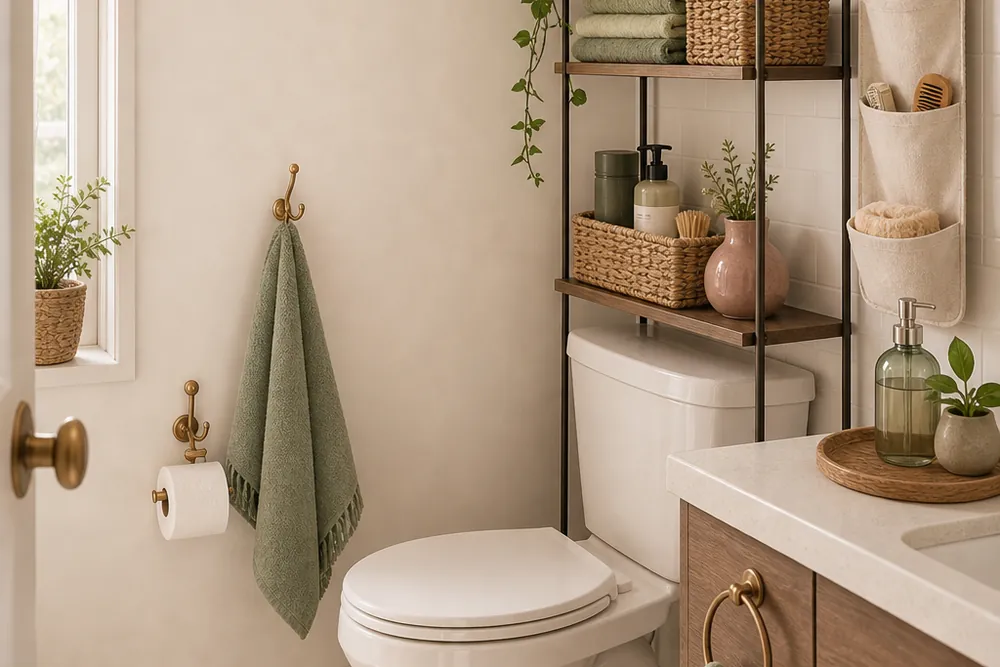
A small bathroom becomes difficult when every category competes for the sink edge. The solution is not to cover every wall with organizers. It is to give daily items one dry, reachable zone, move reserve supplies out of the prime area, and preserve the ventilation and cleaning access that a humid room needs.
Affiliate pilot status: No commission-bearing links are active on this page. Candidate categories are included only as decision support; no retailer URL, product image or purchase call to action will appear without the required evidence and exact owner approval.
The ideas below are planning patterns rather than specific product endorsements. Measure the actual room, read the lease, and follow the load and installation instructions for any item you consider. A removable mounting method can still mark an unsuitable surface or fail when moisture and weight are ignored.
Audit water, humidity and movement
Stand in the doorway and trace the full door swing, the path to the toilet and shower, and the space needed to open every cabinet. Mark splash zones around the sink and tub. Locate exhaust grilles, windows, heaters, outlets and plumbing access; storage should not block them.
Measure usable width, depth and height in each potential zone. For over-toilet storage, include the highest point of the tank, the flush control and room to service the fixture. For a vanity, measure the opening as well as the interior and map the pipes just as you would with the under-sink cabinet fit guide.
Selection guide: who each option is for—and not for
- Washable vanity bins. Best for: grouped supplies in a measured cabinet where bins can be removed around hinges and plumbing. Not for: active leaks, blocked shutoff access or depths that hide containers behind one another.
- Slim rolling carts. Best for: a true parking footprint plus a clear route out of a cabinet-free bathroom. Not for: layouts where casters or handles narrow the doorway, approach path or fixture clearance.
- Drainable shower caddies. Best for: a small current-use set where the support method, loaded weight, drainage and cleaning removal are all compatible. Not for: uncertain surfaces, overloaded bottles or positions that trap moisture and residue.
1. Build one daily sink tray
Group only the items used every morning or evening on a shallow, washable tray. This sets a visual boundary and lets the whole group move for cleaning. Keep the tray clear of the basin edge and do not crowd electrical grooming tools near water; store and use them according to their instructions.
The trade-off is exposure. Open products collect dust and visual detail, so move occasional skincare, medicine and refill stock to a cabinet or another suitable location.
2. Divide the vanity by task
Use one shallow bin for daily care and another for refills or cleaning items, with clear separation between categories that should not mix. Choose a material that can be wiped after a drip. Deep bins often hide small bottles, so test whether the full container can be removed through the cabinet door without hitting a hinge.
Keep shutoff valves and pipe connections visible. If there is dampness, swelling or a persistent odor, report the possible maintenance issue before adding containers.
3. Use a freestanding over-toilet unit only after a clearance check
A narrow freestanding shelf can use vertical space without attaching to tile. It needs a stable, level footprint and enough clearance around the fixture. Confirm that the unit does not rock, interfere with the lid or flush control, or make normal maintenance impossible. Follow any anchoring requirement; if required anchoring is not compatible with the lease, choose a different approach.
Store light towels and paper goods above shoulder height rather than heavy bottles or breakable objects. Open shelves also require regular wiping in a humid room.
4. Put a slim cart in a true parking space
A rolling cart can serve a pedestal sink bathroom that has no cabinet. Measure both the parking footprint and the route out of the room. Casters and handles add to the listed dimensions, and a cart that blocks the door is not flexible storage.
Use the upper level for daily items and lower levels for stable, sealed categories. Lock casters where supplied and keep the cart away from direct spray and heaters.
5. Use the back of the door cautiously
An over-door organizer creates capacity without using floor area. First check the gap above the door, hinge strength, handle clearance and whether the door still closes freely. Loaded pockets can change how a light door moves. Soft, low-weight items are a better match than dense bottles.
If the bathroom door must remain open for airflow, make sure the organizer does not cover a vent or scrape the wall behind it.
6. Create a dry towel cycle
Separate clean, in-use and laundry textiles. Keep clean towels in the driest available cabinet or shelf, give the active towel enough open area to dry, and move laundry out before it becomes a damp pile. A basket that looks attractive but holds moisture is a poor fit for the room.
Follow the building’s ventilation setup and keep exhaust paths unobstructed. Storage does not solve persistent condensation or mold; those conditions may need cleaning, ventilation or maintenance action appropriate to the property.
7. Keep shower storage small and drainable
Limit the shower zone to current-use bottles. Choose a caddy or corner solution that drains, can be removed for cleaning and is compatible with the surface or fixture it uses. Suction, adhesive, tension and hanging systems each depend on specific conditions; none should be assumed universal.
Remove empty containers and wipe the support points regularly. Excess weight and soap residue make any mounting method less predictable.
8. Move reserve stock outside the bathroom
Extra paper goods, unopened toiletries and bulk packs do not need prime bathroom space. A labeled shelf bin in a hall closet can reduce crowding and protect items from humidity. The storage-bin fit guide helps match washable, woven and fabric materials to the right room.
Keep medicines and chemicals according to their labels and household safety needs; the most convenient shelf is not always an appropriate storage location.
9. Use removable hooks as a last measured layer
Hooks can hold a light towel or small tool when the lease, surface and manufacturer permit it. Clean and prepare the surface exactly as directed, respect cure time and load limits, and test a hidden area where appropriate. Grout lines, textured walls, delicate paint and persistent steam can change performance.
A freestanding hook, door hook or existing rail is the fallback when the surface is uncertain. Plan removal before installation instead of discovering the method at move-out.
10. Design a two-minute reset
The room should return to order without opening six lids. Daily items go to the tray, the towel returns to its drying place, laundry leaves the room, and the counter is wiped. If a system cannot support that short reset, reduce categories or simplify containers.
Know where the plan stops
Do not place storage where it narrows safe movement, blocks controls, covers ventilation or creates an overhead falling risk. Tall units must follow stability and anchoring instructions. Keep children, pets and individual mobility needs in the decision. A layout that works in a styled image may fail when the door, shower curtain and actual user all need the same square foot.
How we researched and edited this guide
This guide uses editorial desk research and fit analysis and is not based on product trials. We compared category-level dimensions, materials, drainage, mounting, load and cleaning requirements with common rental bathroom moisture, access and lease constraints. We did not rank specific products or make price or performance claims. Any future candidate still requires exact manufacturer evidence, a real approved product URL, a rights-cleared local image and exact owner approval.
For a whole-home order, continue with the first-apartment organization checklist. For closet overflow, use the small renter closet plan, or return to all Tiny Nest Finds guides.
Frequently asked questions
What should I organize first in a tiny bathroom?
Start with the daily sink routine, clean towels and toilet supplies. Give each a reachable zone, then remove back-stock and rarely used items before adding storage.
Are adhesive bathroom organizers reliable in humidity?
Performance depends on the surface, preparation, temperature, moisture and load. Check the lease and manufacturer instructions, patch-test where appropriate and keep a non-mounted fallback plan.
Can I store towels in woven baskets in the bathroom?
Only where towels can remain dry and air can circulate. In a persistently humid or splash-prone zone, a washable non-absorbent container or storage outside the room may be more suitable.