First Apartment Checklist
First Apartment Kitchen Setup for a Small Rental
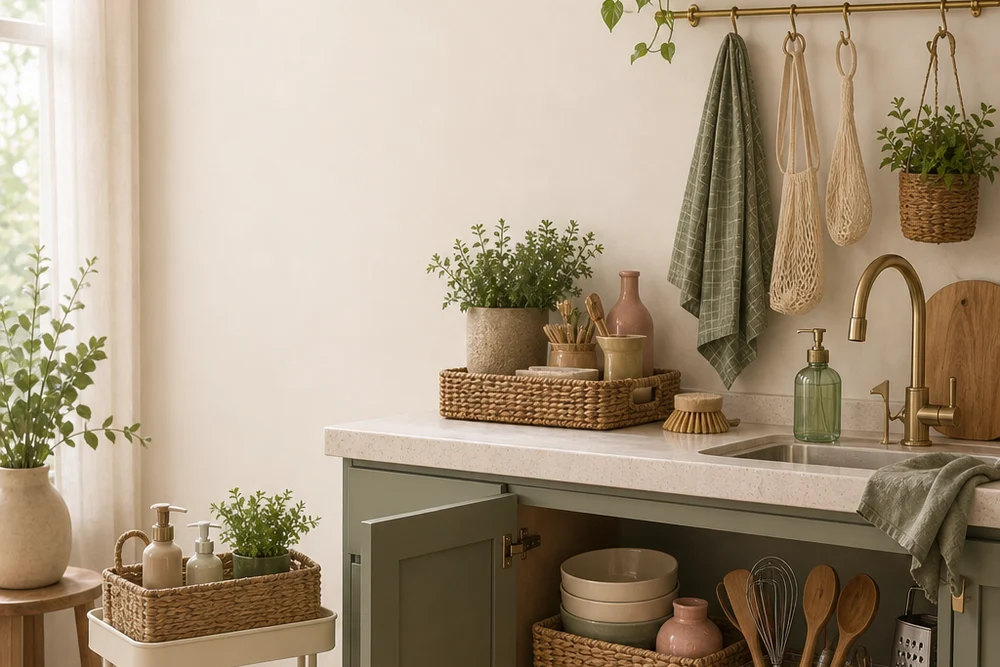
A first-apartment kitchen does not need to look finished during the first week. It needs a safe way to wash hands and dishes, prepare a familiar meal, store food, and clean the work area. Build those functions in order, then add storage only where a measured bottleneck remains.
This guide is deliberately product-neutral. Appliance requirements, food needs and cabinet geometry vary, so use the supplied manuals, package labels, lease and local guidance for your home. When an installed fixture or appliance seems unsafe or faulty, stop and use the property’s maintenance process rather than improvising a repair.
Start with utilities and a first meal
Locate the electrical panel and relevant water controls without altering them. Test supplied lights, taps and appliances in the manner allowed by their instructions. Record and report leaks, damaged cords, unstable fittings or missing required parts. Keep manuals or model numbers accessible.
Unpack one meal path before the full kitchen. A plate, bowl, mug, basic cutlery, cutting surface, suitable pan, dish soap and clean towel can support many first-night options. Choose food that fits the available refrigeration and cooking setup. Keep raw and ready-to-eat foods separated as their packaging directs, wash hands and work surfaces, and follow storage and preparation labels.
Measure the fixed storage accurately
For every cabinet, record the door opening, interior width, depth and height. Note hinges, shelf supports, face frames, handles and the angle needed to remove an item. Measure drawers inside at the narrowest point and check the height beneath the counter when closed. A listed organizer dimension is useful only when its entire motion fits those constraints.
Under the sink, map the pipe, trap, valves and any disposal unit from fixed edges. Leave service access and leak visibility. The under-sink organizer fit guide includes a six-step dry fit for that irregular cabinet.
Protect a real preparation counter
Choose the clearest counter section near the normal preparation area and keep it available. A small kitchen loses function when containers and appliances occupy every edge. Store an appliance elsewhere only when its weight, ventilation needs, cooling time and instructions make that appropriate.
Use one tray for the few items that truly stay out, such as cooking oil or daily tea, provided their labels permit that location. A tray makes cleaning easier but does not justify keeping more objects on the counter.
Create five simple zones
Washing
Keep dish soap, a brush or sponge and a clean drying method near the sink without covering drainage or crowding electrical equipment. Let cloths dry between uses and replace or clean them appropriately. Store reserve cleaning supplies away from food and according to their labels.
Food preparation
Keep the cutting surface and frequently used knife or tool accessible and stored in a way that protects hands and edges. The counter should have enough open area for the foods normally prepared, not a decorative collection of jars.
Cooking
Place the few pans and utensils used weekly near the cooking area, while preserving manufacturer clearances and ventilation. Do not store objects on or around an appliance in a way its instructions prohibit.
Food storage
Group staples by task or meal rather than package color. Keep date, allergen and preparation information. If food is transferred to another container, confirm that the container is intended for that use and retain the information needed for safe handling. Avoid deep categories where older items disappear at the back.
Clean-up and waste
Give waste and recycling a location that does not block cabinet doors or the main walkway. Follow building rules, clean containers as needed and keep the route easy enough that it works during a busy evening.
Assign cabinet height by access and weight
Daily dishes and ingredients belong between comfortable waist and eye level when possible. Store heavy pots low, with handles arranged so the stack can be lifted without a collapse. Light occasional items can use upper shelves, but leave enough hand clearance and avoid loads that are awkward overhead.
Shelf risers can separate short stacks when their legs fit fully on a sound shelf. Turntables can improve a corner when the complete diameter rotates without hitting a hinge. Handled bins help with grouped ingredients when the loaded bin remains easy to pull. Compare those formats in the small-space storage-bin guide.
Use a rolling cart only when it has two measured spaces
A cart requires both a parking footprint and an operating route. Measure caster and handle width, thresholds, door openings and the space needed to turn. Keep heavy items low, use wheel locks where supplied and do not place the cart where it narrows the kitchen exit or sits against a heat source.
The benefit is flexibility: a cart can hold preparation tools today and move to a bathroom or work zone later. The trade-off is permanent floor occupation. Tape its footprint on the floor for several days before buying.
Be cautious with wall and cabinet-door storage
Adhesive rails, magnetic systems and over-door racks are highly dependent on the surface, door gap, load and appliance context. Check the lease and manufacturer instructions, and never cover ventilation, controls or electrical access. A method described as removable can still be incompatible with paint, veneer or heat.
Freestanding alternatives should still be checked for stability. If a unit requires anchoring for safe use and approved anchoring is unavailable, reject it rather than using it unsecured.
Buy by repeated meal, not by complete set
List seven meals or snacks the household actually prepares. Mark the tools used in more than one of them. Those multi-use items form the first kitchen kit. Add a single-purpose tool later only if the task repeats and the tool has a measured home.
This method protects both budget and counter space. Prices and availability change, so compare current total cost only after fit and frequency are established. Avoid bulk food or cookware purchases that exceed current storage merely because the unit price seems lower.
Run the seven-meal review
After seven meals, reset the kitchen and list where the workflow stopped. Was there no dry place for a board, no reachable zone for breakfast, or too much movement between sink and preparation counter? Solve the most frequent issue with the smallest reversible change, then test it before repeating containers across the room.
Use the complete first-apartment checklist to coordinate the kitchen with the rest of the move. For smaller interventions, compare the under-$30 storage planning guide, or return to all eight release guides.
Confirm utilities and appliance instructions
Check that supplied fixtures operate, locate relevant shutoffs and controls, and report maintenance concerns. Use appliances only according to their manuals and the property's guidance.
Unpack one safe meal kit
Start with a plate, bowl, cup, utensils, one suitable pan, a cutting surface, soap and a clean towel. Keep medication, allergens and individual dietary needs in the plan.
Measure cabinets and drawers
Record opening width, interior width, depth and height, plus hinges, lips, pipes, shelf supports and the space needed to remove a container.
Protect the main counter zone
Reserve the clearest counter area for food preparation. Move appliances used infrequently to a cabinet only when their instructions allow safe storage and lifting.
Separate food from cleaning supplies
Store household chemicals according to their labels and away from food, cookware and pet supplies. Keep possible leaks visible and service points reachable.
Create cabinet zones by frequency
Place daily dishes and staples within easy reach, weekly tools nearby, and light occasional items higher. Avoid heavy overhead loads and unstable stacks.
Add one measured organizer at a time
Test a shelf riser, bin, turntable or cart only after its footprint, motion and load pass the real cabinet or floor route. Return formats that add friction.
Review after seven meals
Notice where preparation stops, what remains on the counter and which cabinet is repeatedly searched. Solve the most frequent bottleneck rather than styling every shelf.
Frequently asked questions
What kitchen items are essential on the first night?
Start with drinking water access, one place setting, basic utensils, a suitable pan or no-cook option, dish soap, a clean towel and a safe way to store the food you actually have.
Should I buy a complete kitchen set for a first apartment?
A large set can create duplicates and consume cabinet space. Begin with the tasks and meals you already make, then add a tool only when a repeated need appears.
How do I create more counter space without drilling?
Remove low-frequency appliances, use measured cabinet risers or bins, and consider a stable rolling cart only when it has a parking place and clear route. Keep ventilation and electrical guidance in view.